Tree Risk Assessment Yuma AZ
Know the Risk Before the Tree Fails.
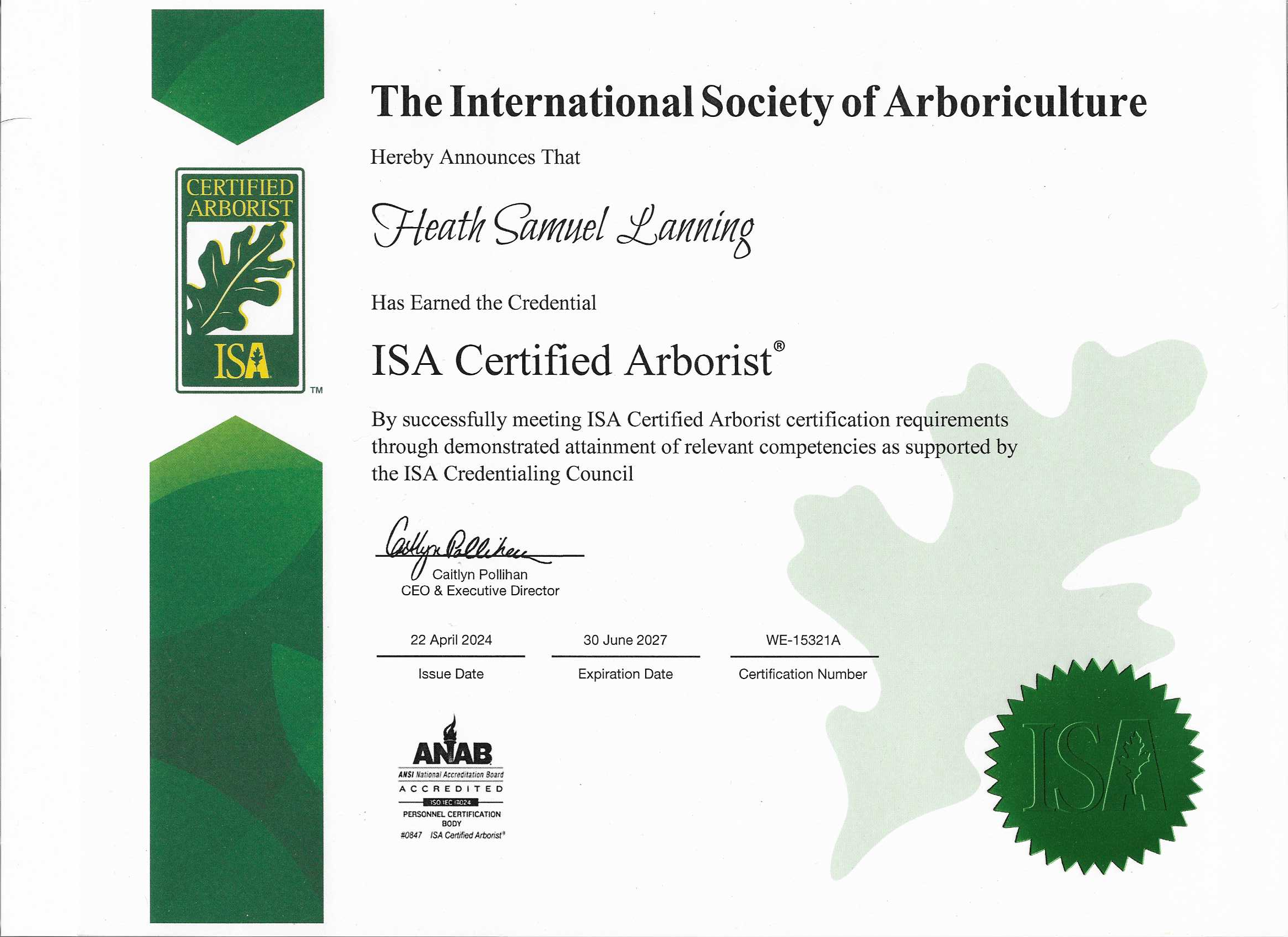
A tree risk assessment helps property owners make informed decisions about pruning, removal, monitoring, cabling, bracing, and storm preparation. NEXTLEVEL brings ISA Certified Arborist and TRAQ Qualified judgment to Yuma properties.
Risk is about the tree and what it can hit.
A tree can look fine from the street and still have structural defects, deadwood, decay, included bark, root issues, lean, storm damage, or load distribution problems. A useful assessment considers both the condition of the tree and the targets around it: roofs, walls, vehicles, people, pools, utilities, driveways, and commercial access.
Yuma tree risk assessments for better decisions
Tree risk assessment in Yuma is valuable because desert properties can place large trees close to homes, block walls, pools, sidewalks, RV access, vehicles, rental units, and commercial traffic. Heat stress, irrigation inconsistency, wind exposure, past pruning, construction disturbance, and storm history can all influence how a tree performs over time. A tree does not need to be visibly failing to deserve a closer look when the targets around it are important.
NEXTLEVEL provides risk-focused guidance for Yuma, Foothills, Somerton, Wellton, San Luis, and surrounding Yuma County properties. The goal is not to scare customers into removing every tree. The goal is to identify visible concerns, explain practical options, and help property owners decide whether pruning, monitoring, support review, or removal is the most reasonable next step.
Common reasons to request an assessment.
Customers request tree risk assessments after storms, before monsoon season, when limbs hang over valuable targets, when a tree begins leaning, before buying or selling property, or when a commercial site needs a more defensible maintenance priority.
Customer problems this service solves
Many property owners know something looks wrong but do not know whether it is urgent. A limb may be dead over a roof, a trunk may have a crack, roots may be lifting, a tree may have started leaning, or a commercial manager may need to decide which trees deserve priority in the maintenance budget. Guessing can lead to unnecessary removal, delayed action, or spending money on the wrong work.
A structured assessment gives the customer a clearer picture. NEXTLEVEL reviews visible defects, target areas, site use, exposure, and practical mitigation options. That helps customers understand whether the tree should be pruned, reduced, monitored, supported, removed, or revisited after seasonal changes.
NEXTLEVEL risk assessment process.
We review the tree, site conditions, visible defects, target occupancy, exposure, potential consequences, and practical mitigation options. Recommendations may include pruning, monitoring, cabling and bracing review, removal, or additional evaluation depending on conditions.
How the assessment is handled
The process begins with the customer's concern: what changed, what is nearby, and what decision needs to be made. NEXTLEVEL reviews the tree from the ground, looks for visible defects, considers the targets around the tree, and notes how people, vehicles, structures, or business operations interact with the area. The assessment is grounded in observable conditions and practical risk reduction.
After reviewing the site, NEXTLEVEL explains the options in plain language. A recommendation may involve crown cleaning, selective crown reduction, clearance pruning, removing dead or compromised sections, reviewing support options, monitoring the tree, or removing it when the risk or defect cannot be reasonably mitigated. The customer gets a path forward instead of a vague opinion.
Credentialed assessment for better decisions.
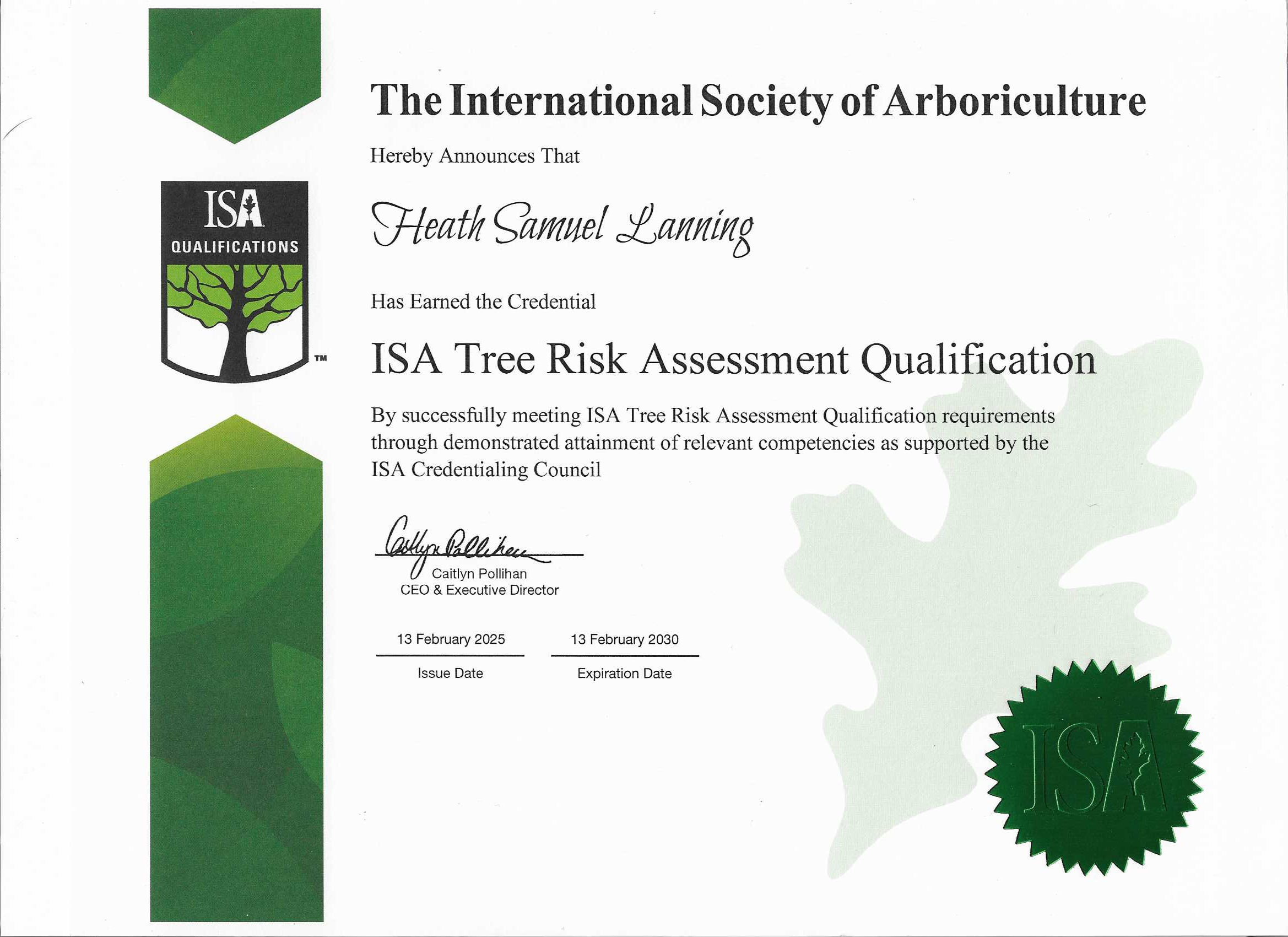
TRAQ refers to Tree Risk Assessment Qualification, a professional credential focused on evaluating tree risk in a structured way. Combined with ISA Certified Arborist training, it helps property owners move beyond guesswork.
Safety, credentials, and professional limits
Tree risk work should be careful, accurate, and honest about what can and cannot be known from a visual review. TRAQ Qualified risk awareness and ISA Certified Arborist training give NEXTLEVEL a stronger framework for evaluating visible tree concerns and explaining mitigation choices. That matters for homeowners, commercial property managers, HOAs, landlords, and anyone responsible for a high-use site.
Risk assessment does not mean promising that a tree will never fail. It means evaluating known and visible conditions, identifying targets, and recommending reasonable steps based on the information available. That disciplined approach protects the customer from both overreaction and inaction.
Tree Risk Assessment services include
- Visual tree inspection
- Target evaluation
- Defect identification
- Storm-risk review
- Pruning recommendations
- Removal recommendations
- Cabling and bracing review
- Commercial property review
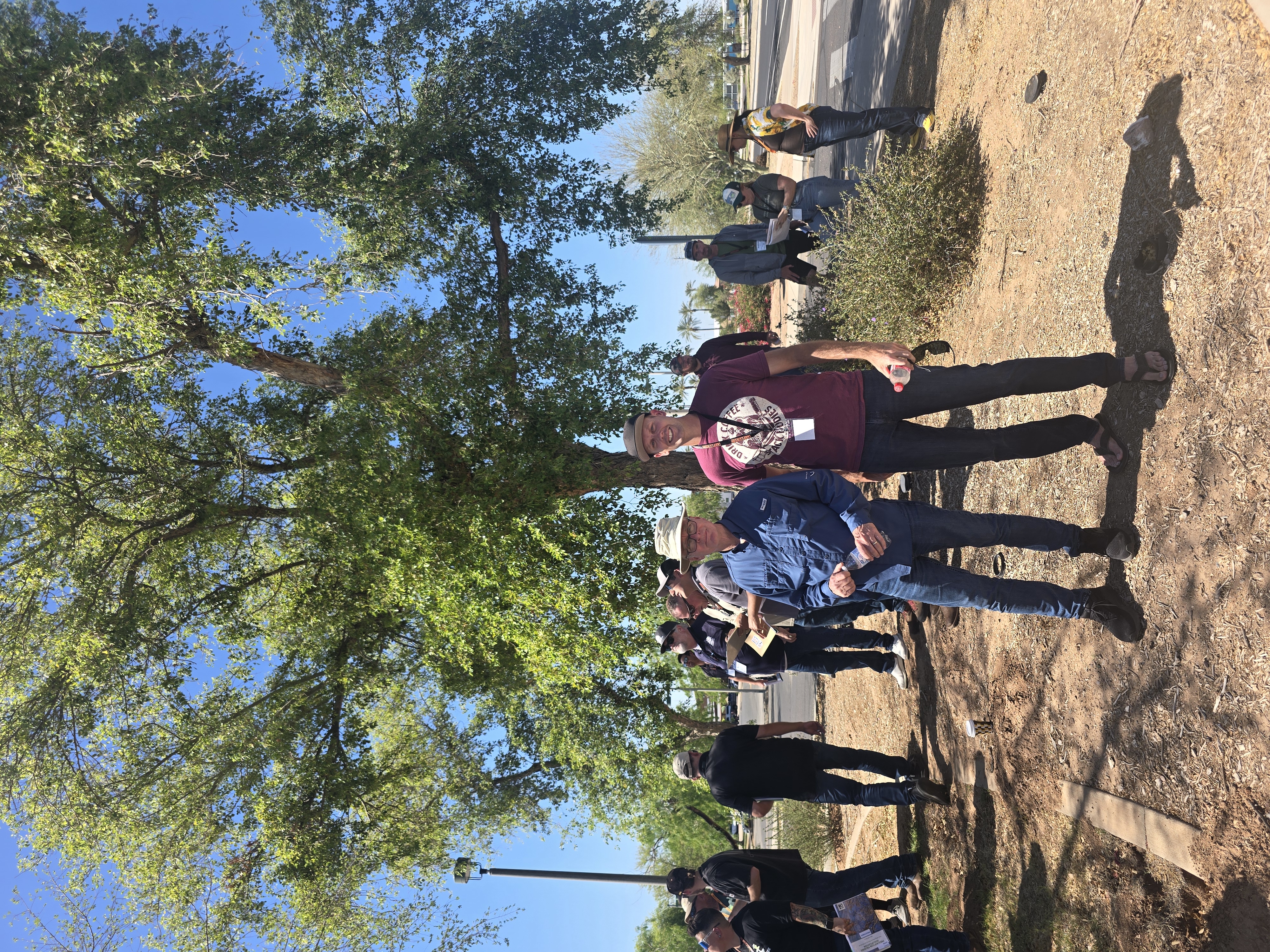
Real NEXTLEVEL field imagery
Tree Risk Assessment FAQs
What does TRAQ Qualified mean?
TRAQ refers to Tree Risk Assessment Qualification, a professional credential focused on evaluating tree risk in a structured way.
Will you always recommend removal?
No. The goal is the right recommendation. Some trees can be pruned or monitored; others should be removed because risk is too high.
Who should request an assessment?
Homeowners, commercial owners, HOAs, property managers, and anyone concerned about a tree near people or property.
Can you assess trees after storm damage?
Yes. Storm damage is one of the most common reasons to request a risk-focused review.
Make the decision with better information.
Request a tree risk assessment from a TRAQ Qualified, ISA Certified Arborist in Yuma.